Who Is Tom Bombadil? Lore, Theories, and Textual Facts
Reader Summary: Exploring who is tom bombadil reveals Tolkien’s most deliberate narrative enigma. Described as Eldest and Master of wood, water, and hill, Bombadil represents an unfallen, non-possessive spirit of pure nature who exists entirely outside the cosmic conflict between Sauron and the Free Peoples.
Every fantasy mythology has its clean hierarchies of gods, demigods, mortals, and monsters. J.R.R. Tolkien built one of the most meticulously cataloged cosmologies in literary history, detailing angelic Ainur, elven lineages, and mortal dynasties with scholarly rigor. Yet nestled along the borders of the peaceful Shire dwells an eccentric figure in bright blue jacket and yellow boots who defies every standard taxonomic category in the legendarium.
Who Is Tom Bombadil in Tolkien’s Lore?
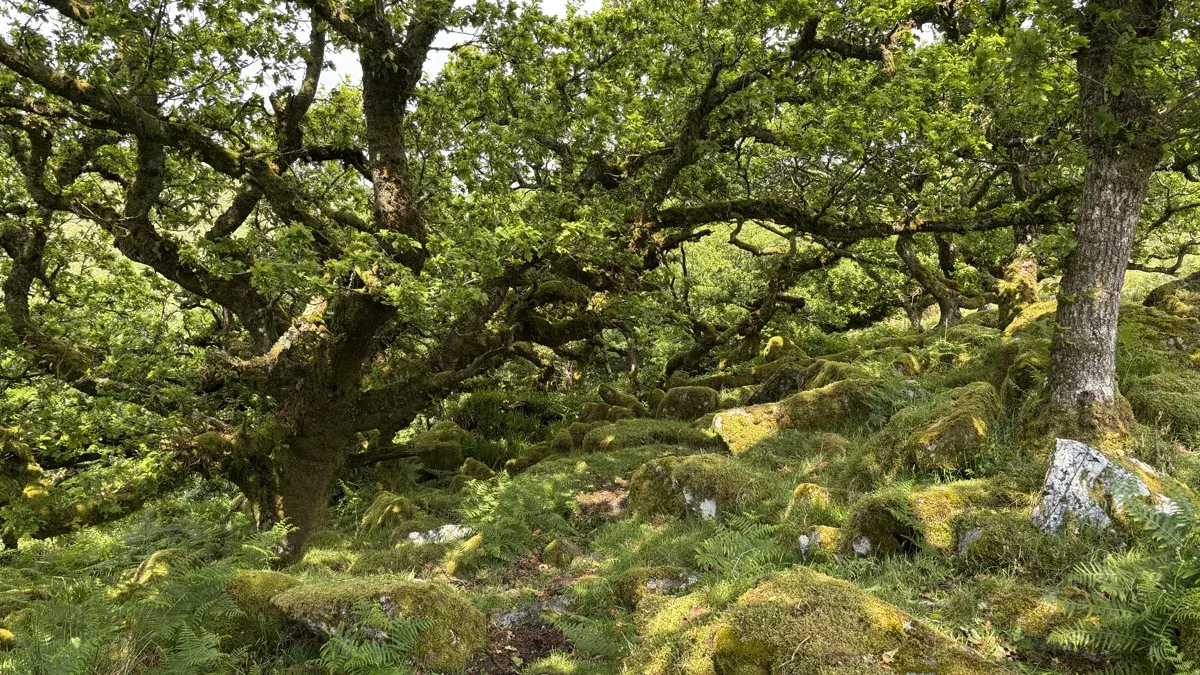
Tom Bombadil is an ancient, merry hermit dwelling in the valley of the Withywindle within the Old Forest. Described as the “Eldest”, he was already present in Middle-earth before the arrival of the Dark Lord Morgoth, before the first trees sprouted, and before the Elves began their great westward migration across the continent.
When Frodo Baggins, Sam Gamgee, Merry Brandybuck, and Pippin Took flee the Shire, their path leads through the dense, hostile thickets of the Old Forest. When Old Man Willow traps Merry and Pippin inside his trunk, Bombadil appears singing lighthearted nonsense rhymes. With a single sung command, he compels the ancient willow tree to release the hobbits. He leads them safely to his cottage, where he and his beautiful wife Goldberry offer shelter, nourishment, and profound wisdom.
His physical appearance and demeanor contrast sharply with typical epic fantasy sorcerers. He wears a tall weathered hat crowned with a blue feather, a brilliant blue coat, and bright yellow boots. He speaks almost entirely in rhythmic rhyming heptameter verse, dancing through woodland paths without fear of dark spirits or roaming wolves. Nature listens to his calls. Songs banish shadows easily.
Why Does the One Ring Have No Power Over Him?
The One Ring has no power over Tom Bombadil because he desires no ownership, possession, or dominion over anyone or anything. The Ring tempts wielders through their latent desires to exert control, but because Tom is completely content in his natural stewardship, the dark relic holds zero psychological or spiritual leverage over him.
During their stay at his cottage, Frodo hands the One Ring to Tom at his cheerful request. In one of the most startling moments in the narrative, Bombadil slips the gold band onto his little finger. He does not turn invisible. The Ring does not tempt him. Instead, he laughs, spins the Ring in midair, causes it to vanish with a playful sleight of hand, and casually returns it to Frodo. Power has no purchase on him. His laughter echoes freely. The dark trinket simply fails.
Later, when Frodo slips the Ring onto his own finger to test its power, he vanishes from mortal sight, yet Bombadil looks directly at him without squinting. To Tom, the Ring is merely a curious piece of worked metal. He sees reality as it truly is.
This dynamic was scrutinized at length during the Council of Elrond. When several council members suggested entrusting the Ring to Bombadil for safekeeping, both Gandalf and Glorfindel rejected the proposal. Gandalf explained that Tom would likely misplace the artifact, simply because it held no importance to his mind. Glorfindel also noted that even Bombadil could not withstand Sauron if the rest of Middle-earth fell to the shadow.
Myth vs Fact: Evaluating Major Fan Theories
Because Tolkien never explicitly defined Bombadil’s species within the formal hierarchy of the Valar and Maiar, readers have generated dozens of speculative theories across the past seventy years.
| Popular Fan Theory | Textual Analysis and Verdict |
|---|---|
| Theory 1: Tom Bombadil is Eru Iluvatar (God) in physical form. | Refuted: Tolkien explicitly denied this in Letter #153 to Peter Hastings, affirming that there is no physical embodiment of God in Middle-earth. |
| Theory 2: Tom is an uncataloged Maia or Vala (like Aule). | Unsubstantiated: Bombadil lacks the mission, cosmic alignment, and angelic responsibilities of the Ainur. He exercises no governance beyond his personal valley. |
| Theory 3: Tom is the physical embodiment of the Music of the Ainur. | Plausible Allegory: His continuous singing and mastery over ancient wood and water align poetically with the primordial song that crafted the physical universe. |
| Theory 4: Tom is secretly malicious or the Witch-king. | Debunked: Fanciful internet creepypasta that directly contradicts his rescue of the hobbits and his banishment of the Barrow-wight using sacred lore songs. |
When Goldberry answers Frodo’s question “Who is Tom Bombadil?” with the simple phrase “He is”, she is not invoking theological declarations. Rather, she is stating that Tom exists as an unfallen individual who is completely himself, needing no title, ancestry, or justification for his presence.
Readers exploring ancient lineages can consult our guide to The Silmarillion, which charts the broader cosmological hierarchies established during the First Age.
What Did Tolkien Write in His Letters About Bombadil?
In his private correspondence, Tolkien explained that Tom Bombadil was intentionally included as an unsolved mystery to demonstrate that even vast mythological worlds contain enigmas beyond formal classification. Bombadil represents a deliberate critique of power politics and an embodiment of pure natural history.
In Letter #144 (dated April 1954), Tolkien provided his most famous authorial commentary on the character:
“And even in a mythical Age there must be some enigmas, as there always are. Tom Bombadil is one (intentionally).”
Tolkien expanded on this idea in the same letter, writing that Bombadil represented the spirit of pure botanical science and natural appreciation. In a world consumed by wars of domination, Bombadil asks for nothing, conquers nothing, and envies nothing. He embodies absolute pacifism. Truth speaks simply. Power holds no charm here.
Bombadil had an endearing real-world origin. He began as a wooden Dutch peg doll owned by Tolkien’s second son, Michael. Tolkien composed lighthearted poems about him in the 1930s, published in The Oxford Magazine, before incorporating him into the opening chapters of the ring saga.
What Are the Four Names of Bombadil Across Middle-earth?
Different cultures across Middle-earth knew Bombadil by distinct historical names reflecting his primordial presence in their ancestral lore. Each title captures how different kindreds perceived his timeless existence long before recorded history began.
- Iarwain Ben-adar (Elves): In Sindarin speech, this title translates literally as “Oldest and Fatherless”, acknowledging that he had no parents and preceded the first elven awakenings.
- Forn (Dwarves): The ancient Dwarves of Khazad-dum named him Forn, a northern linguistic term signifying ancient antiquity.
- Orald (Men): Early mortal tribes of the North gave him the name Orald, which derives from Old English meaning very ancient or primeval.
- Tom Bombadil (Hobbits): The cheerful buckland name adopted by the Periannath, reflecting his eccentric appearance and jaunty songs.

Who Is Goldberry the River-Daughter?
Goldberry is Tom Bombadil’s wife, introduced as the “River-daughter” of the Withywindle stream. She embodies the living spirit of seasonal renewal, water lilies, and flowing woodland brooks, living in joyous domestic harmony with Tom in their secluded valley dwelling.
Her origins are intimately tied to English river folklore. When the hobbits enter her presence, she sits surrounded by earthenware bowls filled with fragrant white water lilies. Her voice sounds like singing water falling over stones. She represents the pastoral beauty of the British countryside that Tolkien cherished throughout his life.
When the hobbits leave the cottage and become trapped inside a haunted tomb by a Barrow-wight, Tom arrives in response to Frodo’s desperate rhyming call. He breaks the tomb’s stone lintel, scatters the barrow treasures in the grass, and arms the hobbits with ancient Westernesse daggers forged during the wars of Arthedain.
Tracing the geographic path of these adventures on our detailed map of Middle-earth clarifies how close the perilous Old Forest lies to the tranquil borders of the Shire.
Why Was Tom Bombadil Excluded from Adaptations?
Tom Bombadil was excluded from theatrical film adaptations because his narrative role does not advance the central forward drive of the Ring quest. In cinematic pacing, spending thirty minutes with an eccentric singer who cannot be harmed by the Ring diminishes the perceived urgency of the overarching threat.
Screenwriters Peter Jackson, Fran Walsh, and Philippa Boyens recognized that while Bombadil works brilliantly in prose as a philosophical pause, his complete invulnerability to the Ring undermines the dramatic stakes necessary for a cinematic feature film. If someone can put on the Ring and laugh at it, casual viewers might question why the characters go to such agonizing lengths to destroy it.
Nevertheless, in Tolkien’s literary structure, Bombadil acts as an indispensable moral compass. He shows readers what an uncorrupted heart looks like before the narrative plunges into the bleak shadows of Moria and Mordor.
For more discussions on ancient philology and Middle-earth history, explore our languages and lore archive or examine how Bombadil’s presence fits into the chronological timeline of events.
How we researched this: Elias Thorne examined J.R.R. Tolkien’s correspondence in Letters #144 and #153, comparing draft manuscripts in The Return of the Shadow against the published text of The Fellowship of the Ring.
Frequently Asked Questions About Tom Bombadil
Is Tom Bombadil older than Gandalf and Sauron?
In physical Middle-earth presence, yes. Bombadil is called “Eldest” and lived in Middle-earth before the arrival of the Valar and Maiar in the physical world. However, in cosmic terms, angelic spirits existed outside time before Ea was created.
What is Tom Bombadil’s Elvish name?
His Elvish name in Sindarin is Iarwain Ben-adar, which translates to “Oldest and Fatherless”. The Dwarves called him Forn, and men of the North named him Orald.
Could Tom Bombadil have defeated Sauron single-handedly?
No. At the Council of Elrond, Glorfindel stated that if Sauron regained the Ring and conquered all of Middle-earth, Bombadil would eventually fall, “Last as he was First, and then Night will come.”
Why did Tom Bombadil give the hobbits daggers?
After rescuing the hobbits from the Barrow-wight, Tom retrieved ancient daggers crafted by the Men of Westernesse from the mound. These daggers were spelled with runes specifically designed to injure the Witch-king of Angmar.
What happened to Tom Bombadil after the War of the Ring?
After the destruction of the Ring, Gandalf parted ways with the hobbits specifically to spend a long season conversing with Bombadil, noting that Tom had much to talk about now that the shadow was lifted.