
Elvish Language Guide: Quenya, Sindarin, and Tengwar
Reader Summary: The elvish language is not a single monolith but an entire philological family created by J.R.R. Tolkien. Its primary living branches are Quenya, an archaic ceremonial tongue inspired by Finnish grammar, and Sindarin, the everyday spoken dialect modeled after Welsh phonetics and Celtic consonant mutations.
When readers open fantasy epics, constructed dialects often feel like decorative gibberish designed to give names an exotic cadence. For J.R.R. Tolkien, the creative equation worked in the exact opposite direction. The stories, kingdoms, genealogies, and legendary wars of Middle-earth were invented specifically to provide a world where his constructed dialects could naturally evolve, interact, and diverge across thousands of years.

What Is the Elvish Language?
The elvish language encompasses a deeply developed family of tongues sharing ancestral roots in Primitive Quendian, spoken when the first elves awoke beside the waters of Cuivienen. Over successive historical ages and migrations, this ancestral speech branched into distinct cultural dialects, most notably Quenya and Sindarin, each possessing rigorous grammatical frameworks, phonological sound laws, and dedicated scripts.
To grasp how these speeches function, one must first recognize that no single individual speaks generic Elvish. In Middle-earth lore, asking someone if they speak Elvish is comparable to asking whether a European speaks Romance language. A scholar in Rivendell or Gondor might write poetry in ancient High Elven, conduct state diplomacy in Grey Elven, and read historic stone monuments carved in ancient Northern runes.
Tolkien spent over six decades developing these linguistic systems, constantly revising noun declensions, verbal conjugations, and etymological roots. Far from being a static glossary of fantasy terms, each dialect possessed an internal history shaped by historical migrations, geographic isolation, and catastrophic cultural splits.
How Did Tolkien Construct These Dialects?
J.R.R. Tolkien constructed his fictional dialects by applying comparative historical philology, formulating internal phonetic shifts and sound laws that mirrored real European linguistic evolution. He drew grammatical structures from Finnish, phonological aesthetics from Welsh, and historical Latin dignity to generate living tongues that felt organic rather than artificial.
As Rawlinson and Bosworth Professor of Anglo-Saxon at Oxford University, Tolkien understood how real languages mutate across geographic barriers and historical upheavals. When the Elves began their great westward march toward the Undying Lands, tribes separated physically. Tolkien meticulously documented the phonological shifts that occurred over millennia as groups drifted apart:
- Primitive Quendian: The prehistoric parent speech shared by all Firstborn prior to their separation at Cuivienen.
- Common Eldarin: The intermediate branch spoken by those who undertook the Great Journey westward toward the Sea.
- Quenya (High Elven): Developed in the blessed realm of Valinor by the Vanyar and Noldor, sheltered from warfare and preserving archaic vocalic purity.
- Sindarin (Grey Elven): Developed in Middle-earth by the Teleri who remained in Beleriand, undergoing extensive phonetic erosion and consonant mutation over thousands of years.
Understanding these historical migrations is closely tied to the broader history recorded in the Silmarillion, which details the societal ruptures that scattered the Elven kindreds across different geographic territories.
Quenya vs Sindarin: What Are the Key Differences?
Quenya and Sindarin differ fundamentally in phonology, grammar, and social function across Middle-earth. Quenya functions as an agglutinative, vowel-rich ceremonial speech influenced by Finnish and Latin, whereas Sindarin operates as an everyday spoken vernacular distinguished by complex Celtic consonant mutations, vowel harmony, and Welsh phonetics.
| Linguistic Feature | Quenya (High Elven) | Sindarin (Grey Elven) |
|---|---|---|
| Primary Real-World Inspiration | Finnish grammar, Latin and Greek phonetics | Welsh phonology, Celtic morphology |
| Aesthetic Quality | Melodic, vocalic, flowing, ceremonial | Consonantal, earthy, rapid, soft mutations |
| Grammatical System | Agglutinative (suffixes stack onto root stems) | Fusional, characterized by internal vowel mutations (i-umlaut) |
| Noun Cases | 10 cases (Nominative, Accusative, Genitive, Dative, Locative, Allative, Ablative, Instrumental, Respective, Possessive) | No noun case inflections; uses prepositions and word order |
| Third Age Usage | Archaic liturgical tongue of scholars and loremasters | Daily spoken vernacular in Rivendell, Lothlorien, and the Woodland Realm |
A central historical turning point explains why these two tongues occupied such radically different spaces during the Third Age. Following the Kinslaying at Alqualonde, King Thingol of Doriath learned of the tragedy and issued an absolute royal ban prohibiting the speech of the Noldor throughout Beleriand. Consequently, the exiled Noldor adopted Sindarin for everyday speech, retaining Quenya exclusively as a prestigious language of high lore, formal treaties, and elevated song.
How Do Tengwar and Cirth Writing Systems Work?
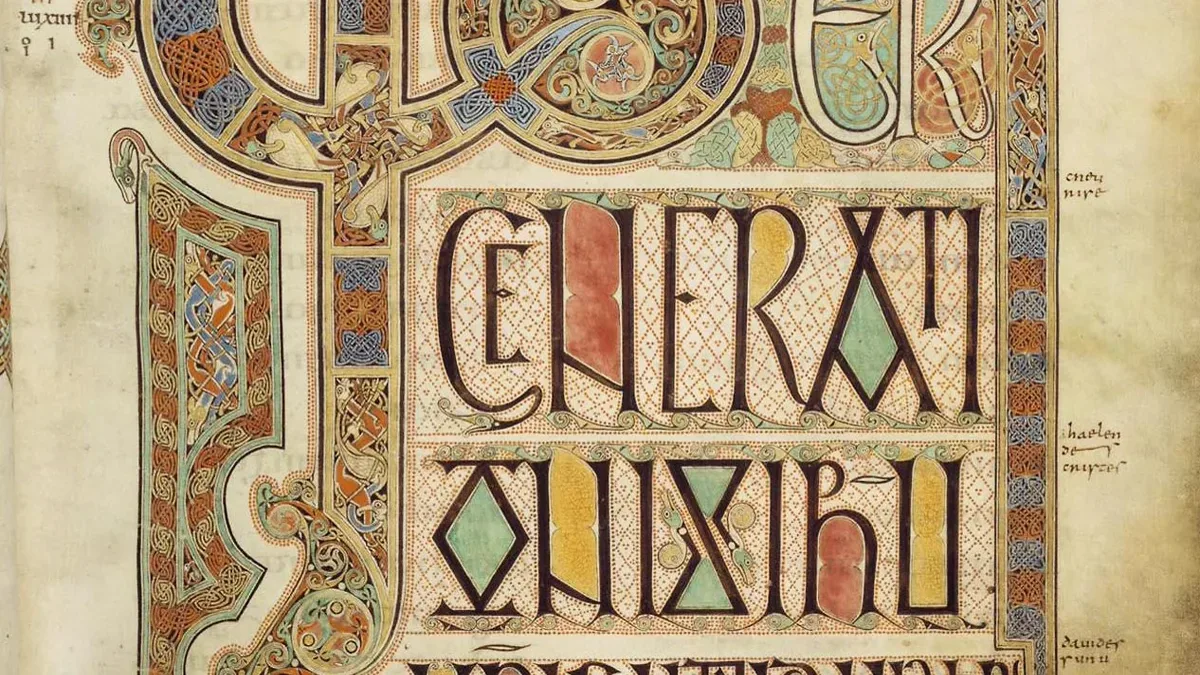
Tengwar and Cirth represent two distinct writing systems designed to transcribe various dialects phonetically. Tengwar is a featural cursive script invented by Feanor where character shapes encode phonetic values, whereas Cirth is an angular runic alphabet created by Daeron for carving inscriptions on stone and wood.
One common misunderstanding among newcomers is confusing the writing script with the language itself. Tengwar is not a language; it is a phonetic alphabet that can write Quenya, Sindarin, Westron, or modern English. Feanor designed the letters systematically so that each component of a character signifies a specific physiological articulation:
- The Stem (Telco): Indicates whether a consonant is voiced, unvoiced, or aspirated based on whether the stem extends upward, downward, or remains short.
- The Bow (Luva): Indicates the place of articulation (dental, labial, palatal, or velar) and whether the sound is accompanied by nasality.
- Vowel Marks (Omatehta): In Quenya modes, vowel signs appear above the preceding consonant, reflecting vowel-final syllable structures. In Sindarin modes, vowel signs appear above the following consonant, reflecting consonant-final word patterns.
Conversely, Cirth resembles historical Germanic futhark runes. While the Elves developed Cirth first in Doriath, they largely abandoned it for cursive manuscripts once Tengwar became widespread. Dwarves of Khazad-dum enthusiastically adopted Cirth, adapting it into the famous Angerthas Moria runic system observed on the West Gate and Balin’s tomb.
Can You Learn to Speak Conversational Elvish Today?
You can learn conversational phrases and write functional compositions in reconstructed Elvish, but complete real-world fluency remains impossible. Tolkien never completed a definitive dictionary or closed grammar system, leaving gaps in everyday modern vocabulary that require contemporary linguists to coin neologisms from ancient roots.
Scholars categorize modern studies into two distinct methodologies:
- Original Historical Tolkienian: Focused strictly on analyzing what Tolkien himself wrote across his manuscripts, essays, and posthumous academic journals like Vinyar Tengwar and Parma Eldalamberon. This approach values philological authenticity over conversational utility.
- Neo-Sindarin and Neo-Quenya: Reconstructed grammatical systems expanded by contemporary linguists, including David Salo, who formulated complete spoken dialogues for the classic film adaptations. Neo-dialects fill vocabulary voids (such as modern household items or specific military commands) by deriving new stems from documented primitive roots.
For individuals wanting to explore the geographical dispersion of these cultures across the continent, checking the detailed map of Middle-earth clarifies which havens and kingdoms maintained active elven linguistic traditions during the War of the Ring.

Essential Elvish Phrases and Their Translations
Whether greeting travelers or analyzing famous book passages, several well-documented phrases illustrate the phonological contrast between High Elven ceremony and Grey Elven greeting.
Common Quenya Formulae
Elen sila lumenn’ omentielvo
“A star shines upon the hour of our meeting.” (Spoken by Frodo Baggins to Gildor Inglorion in Woody End; showcases the rich melodic vowels and possessive pronominal suffixes characteristic of Quenya).
Namárie
“Farewell” or literally “Be well” (The title of Galadriel’s poignant lament in Lothlorien, representing the longest continuous Quenya prose text in the core narrative).
Common Sindarin Formulae
Mae govannen
“Well met” (The standard formal greeting between acquaintances and hospitable hosts in Rivendell).
Mellon
“Friend” (The password carved above the Doors of Durin, illustrating how Celebrimbor and Narvi used Sindarin as a diplomatic bridge between their peoples).
Hannon le
“Thank you” (A widely accepted neo-Sindarin conversational phrase for polite acknowledgment).
Studying these expressions against the chronological timeline of events reveals how language preserved cultural memories across four distinct ages of political transition and geographic renewal.
How we researched this: Elias Thorne analyzed Tolkien’s original philological manuscripts published in Vinyar Tengwar and Parma Eldalamberon, comparing phonological rules and Tengwar consonant tables across sixty years of linguistic drafts.
Frequently Asked Questions About Elvish Languages
Did Tolkien create the languages before writing the books?
Yes, Tolkien created his languages decades before writing the narratives. He famously remarked that the mythology and stories arose primarily to provide a fictional world, history, and people for his linguistic inventions to inhabit.
Which Elvish dialect is easier for beginners to learn?
Quenya is generally considered easier for beginners because its grammar is highly regular and structured with agglutinative suffixes. Sindarin presents greater difficulty due to its complex consonant mutations, vowel shifts, and irregular plural forms.
What is the difference between translating and transliterating in Tengwar?
Translating means converting words into Quenya or Sindarin vocabulary (such as translating “friend” to “mellon”). Transliterating means writing English words phonetically using Tengwar letterforms without altering the underlying English vocabulary.
How many distinct Elvish dialects did Tolkien develop?
Tolkien developed more than a dozen distinct dialects at various levels of completeness, including Quenya, Sindarin, Telerin, Nandorin, Avarin, and Primitive Quendian, with Quenya and Sindarin being the most fully realized.
Where can I study Tolkien’s authentic linguistic papers?
Tolkien’s authentic linguistic manuscripts are published academically in the peer-reviewed journals Vinyar Tengwar (published by the Elvish Linguistic Fellowship) and Parma Eldalamberon, edited by Christopher Gilson and Carl F. Hostetter.